Current & Recent Projects

Psychology of identity management
Psychology of identity management systems

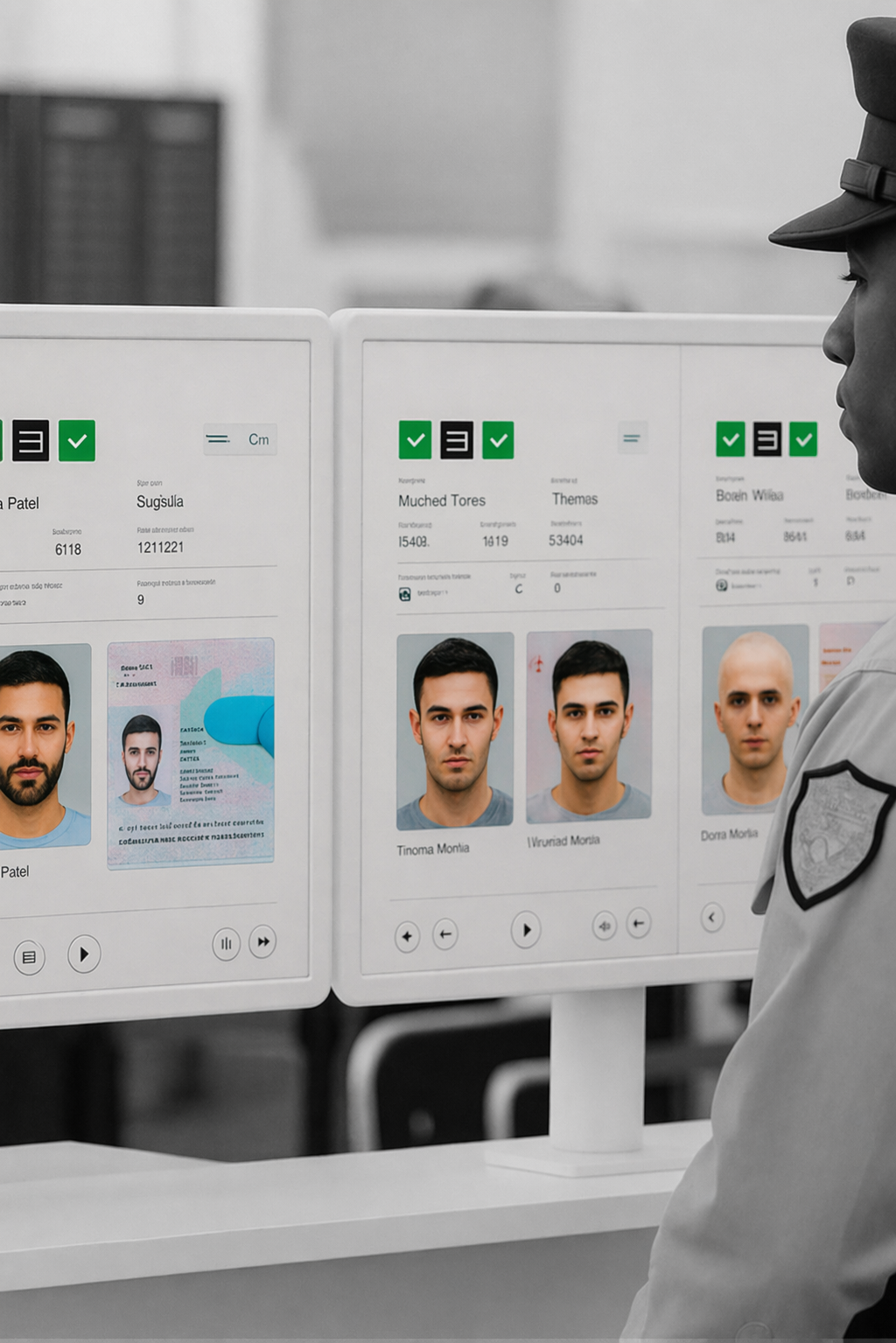
Confidence in person identity is central to transactions between governments, institutions, and citizens. Identity fraud costs Australians billions of dollars each year. Our 15-year collaboration with the Australian Passport Office (APO) aims to strengthen identity checks by applying insights from psychological research. This has led to changes at the APO — and in organisations around the world — in how they recruit, train, and support personnel involved in identity management.


Funding: ARC Linkage Projects (LP230201076, LP160101523, LP130100702, LP110100448)
 

Key output: Towler, A., Kemp, R. I., Burton, A. M., Dunn, J. D., Wayne, T., Moreton, R., & White, D. (2019). Do professional facial image comparison training courses work? PLOS ONE, 14(2), e0211037.

Eye tracking in naturalistic social environments

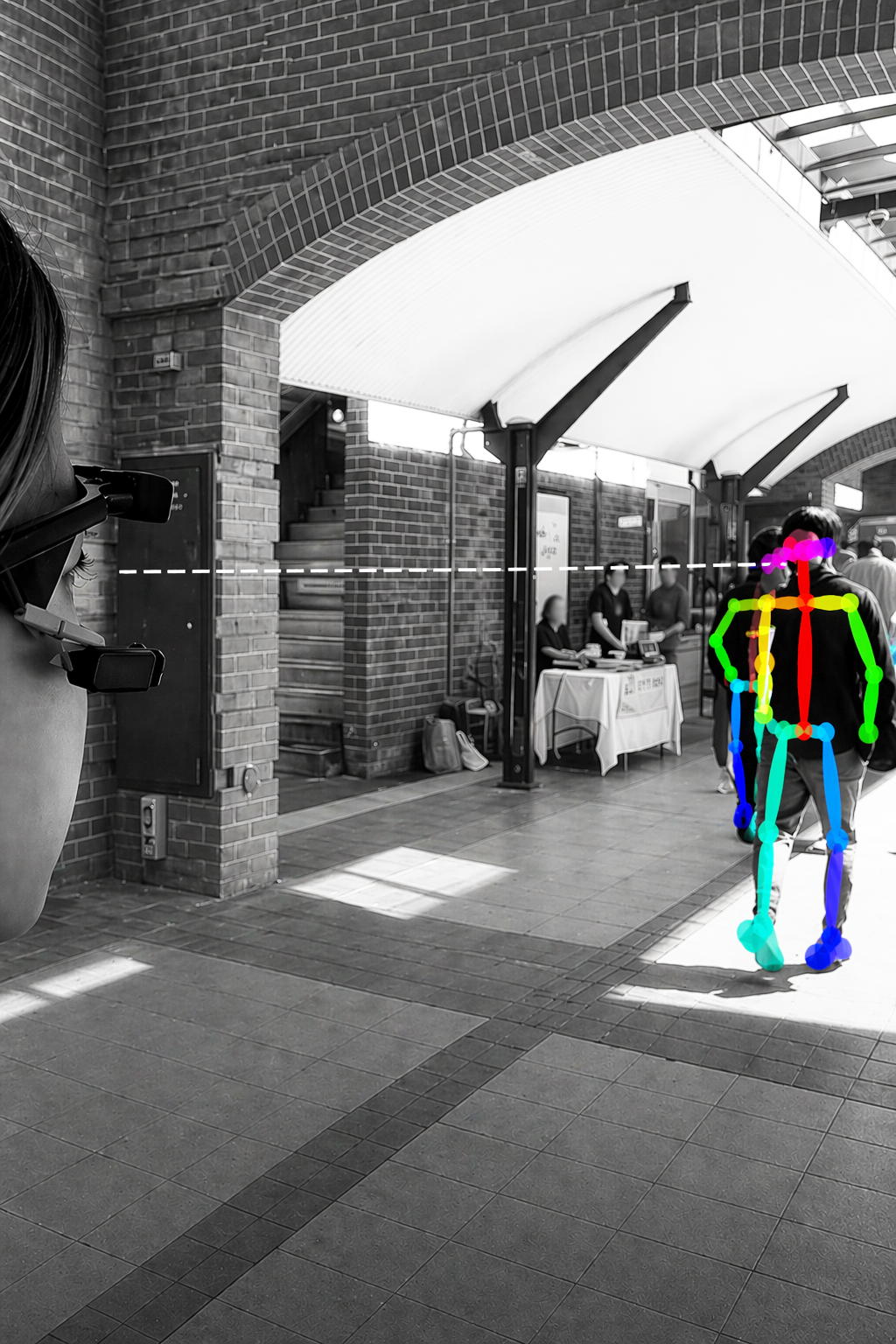
Using wearable eye-tracking and person-detection software, we have developed a method for automatically detecting fixations directed to people in naturalistic environments. We are using this approach to understand how social attention relates to face processing ability. In collaboration with the UNSW Parent-Child Research Clinic, we are also using this approach to better understand the dynamics of parent–child interactions and how they vary in children with conduct problems.


Funding: ARC Future Fellowship (FT200100353), NHMRC Ideas Grant (2046597)


Key output: Varela, V. P., Towler, A., Kemp, R. I., & White, D. (2023). Looking at faces in the wild. Scientific Reports, 13(1), 783.

Brain activity in super-recognisers

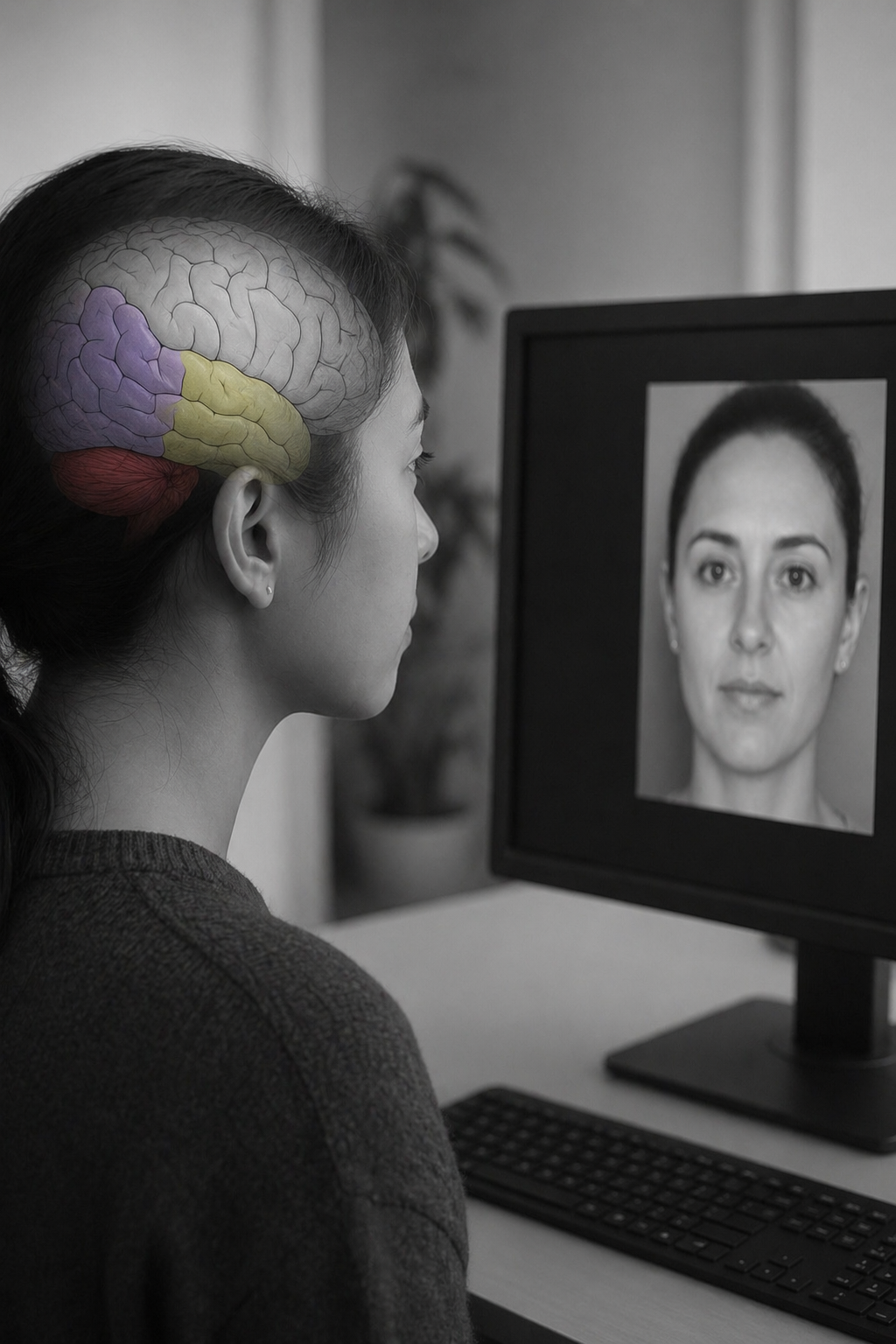
Super-recognisers are people with exceptionally high performance on face recognition tasks. Evidence suggests that their ability is stable across different types of tasks and is strongly influenced by genetic factors. In partnership with researchers at the MARCS Institute for Brain, Behaviour and Development, and Erin Goddard’s lab at UNSW, we are beginning to examine the neural activity that underpins super-recognisers’ extraordinary abilities.


Funding: National Intelligence Discovery Grant (NI240100300)

Perceiving AI-generated faces

AI-generated faces are now extremely lifelike. Indeed, they often appear more real than actual human faces — a phenomenon termed “hyper-realism.” This raises important questions about what counts as a face, and a person, in the age of AI. How can real and fake people be distinguished in online scenarios and in identity management tasks? We are currently addressing these questions in collaboration with the ANU Emotion and Faces Lab and Gelareh Mohammadi (UNSW Computer Science).


Funding: ARC Discovery Project (DP260100208)


Key output: Dunn, J. D., White, D., Sutherland, C. A., Miller, E. J., Steward, B. A., & Dawel, A. (2026). Too good to be true: Synthetic AI faces are more average than real faces and super-recognizers know it. British Journal of Psychology.

Information sampling strategies for face identification
Information sampling strategies for face processing

What information do people use when they identify faces? Answering this question provides basic insight into how the visual system optimises for common perceptual tasks, and can also inform training and practice in forensic settings. Our work in collaboration with the Active Vision Lab (University of Wollongong) shows that the way individuals move their eyes when looking at faces — and the face information they sample from these fixations — plays a large role in their face recognition ability.


Funding: ARC Discovery Project (DP190100957)


Key output: Dunn, J. D., Varela, V., Popovic, B., Summersby, S., Miellet, S., & White, D. (2025). Super-recognizers sample visual information of superior computational value for facial recognition. Proceedings of the Royal Society B: Biological Sciences, 292(2058).